

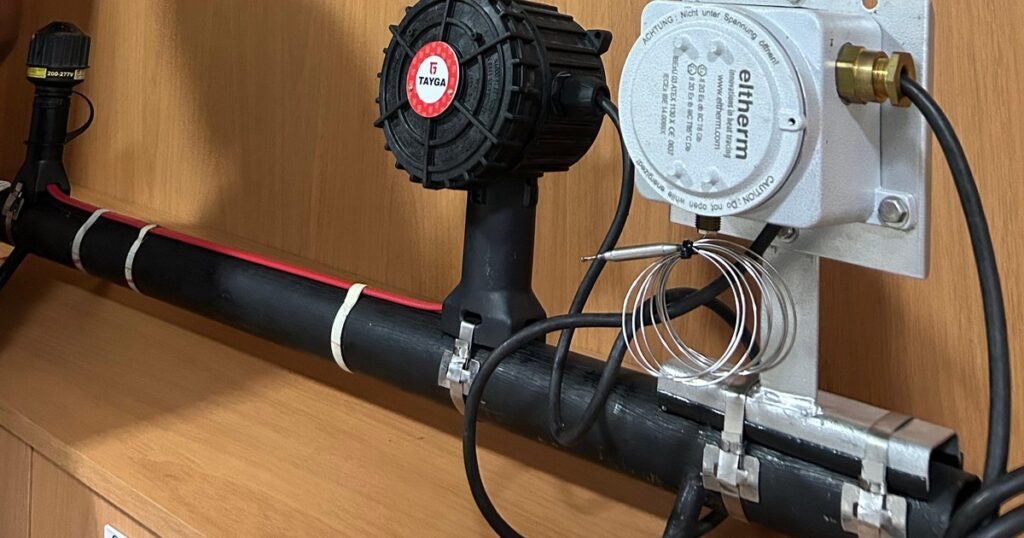
How much does an electrical dash system cost?? It depends, and depends on more factors than it seems: the fluid that passes through the line, the temperature that the operation needs to maintain, the voltage available in the plant, the environment, access and even the presence of classified area. In this article, we show the five steps that Tayga analyzes before presenting a proposal and what each of them reveals about your project.
Electrical trace is a solution used to maintain or raise the temperature of pipes, tanks, equipment and process lines. So that the system works safely and efficiently, the budget needs to be based on correct information: the heating cable, the panel, electrical protection and temperature control are dimensioned based on the actual characteristics of the application.
This is the role of the internal analysis procedure that Tayga applies to every electrical trace budget. There are five steps, and each one answers a different question about its application. Let's go through them.
STAGE 1
Project identification
It all starts with the basics: the name of the client or work, the location of the installation, the technical person on site and the contact channels. This information organizes service and keeps the technical and commercial history of the project correct from day one, what makes a difference in each next step, from analysis to execution.
STAGE 2
The application: where the electrical trace will work
The second step is to understand where the system will be applied. Could be a lye line, a hot water line, an oil line, a process pipe, a tank or other industrial equipment. For each application, the analysis considers:
- The process fluid: the material that passes inside the pipe. Could be water, oil, caustic soda, acid or other product that needs to be heated or maintained at a certain temperature;
- The maintenance temperature: the temperature that the operation needs to maintain. It is one of the most important information in the project, because it guides the sizing of the heating cable and the thermal insulation;
- Line length and pipe diameter: data that directly influences the amount of cable, the type of system and the final cost;
- Not tank case, diameter and height, that define the area of application and the need for heating.
Line components
Valves, bombs, flanges, filters, Special instruments and connections are also included in the analysis. These components may require additional cable, specific finish, removable insulation or special care during installation. Ignoring them in the budget is one of the most common causes of surprises on work..
Designs, photos, sketch, technical memorials and specifications complement this stage. The more the technical team can see of the application, the more precise the proposal.
STAGE 3
Site conditions
The same system can behave very differently depending on where it is installed.. At this stage, the analysis evaluates:
- Indoor or outdoor environment: exposure to rain, sol, vento, humidity and aggressiveness of the environment;
- Line access: free or obstructed access, tight places, need for scaffolding, platform, ladder or working at height;
- Installation height: above two meters, Special access features and additional security measures may be required;
- Interference with electrical cables, metal structures, pipes, gas lines, nearby equipment or circulation areas.
Classified area
- If the location has a risk of explosive atmosphere, flammable gases, fuels or dangerous products, This information changes the specification of electrical components and system safety requirements. In classified areas, the electrical trace requires components suitable for the risk, and that is exactly why this verification is part of Tayga's analysis from the budget, not after him.
Available electrical voltage
The voltage available in the plant, What 110 V, 220 see you 380 V, is necessary for correct selection of the heating cable, of the panel, electrical protection and control system. It is simple information to inform and decisive for the project: each element of the system is chosen based on it.
STAGE 4
Existing materials
Before proposing the new system, the analysis checks whether there is already thermal insulation installed in the piping or equipment, what type and in what condition: lã de rocha, foam, wet material, scratched, deteriorated or in good condition.
It is also assessed whether it will be necessary to remove existing insulation before installation.. This removal directly impacts the scope, the deadline, the workforce, security and cost. Considering this from the budget avoids additions and delays during execution.
STAGE 5
Project requirements and execution conditions
The last stage gathers the requirements that shape the final proposal: technical report, ART, engineering documentation, certificate of materials, installation procedure, integration with plant security systems, specific deadline, restricted working hours or scheduled stoppage window.
The particularities of the location also come into play here.: controlled access, operating environment, need for release, work at height, confined space or interference with production. These are conditions that influence the team's planning in the field and, when mapped from the beginning, guarantee execution without surprises.
the end of the night period must not be before 9:00, as in thermal insulation analysis, photos and technical documents speed everything up: a good image of the line, of the panel and access avoids interpretation errors and reduces the time between the request and the proposal.
In summary: what will be analyzed in your budget
Tayga survey summary
- The information that guides the proposal.
- 1. Project identification: work, location and contact of the person responsible;
- 2. The application: process fluid, maintenance temperature, length, line diameter and components;
- 3. Site conditions: environment, access, height, interference, classified area and available voltage;
- 4. Existing insulation and possible need for removal;
- 5. Project requirements: documentation, ART, execution deadlines and conditions.
More than cables: an engineering solution
In electrical trace, small details make a difference. Temperature, fluent, length, diameter, isolation, electrical voltage, classified area and access conditions are essential information for good sizing. When this analysis is done using a method from the budget, the result appears on execution: correct scope, deadline met and a system that operates safely from day one.
We don't just supply heating cables. We deliver thermal control, operational safety and reliability for industrial processes. Energy Efficiently, Precise control and responsible thermal solutions.
Have an application in mind? Talk to us.