

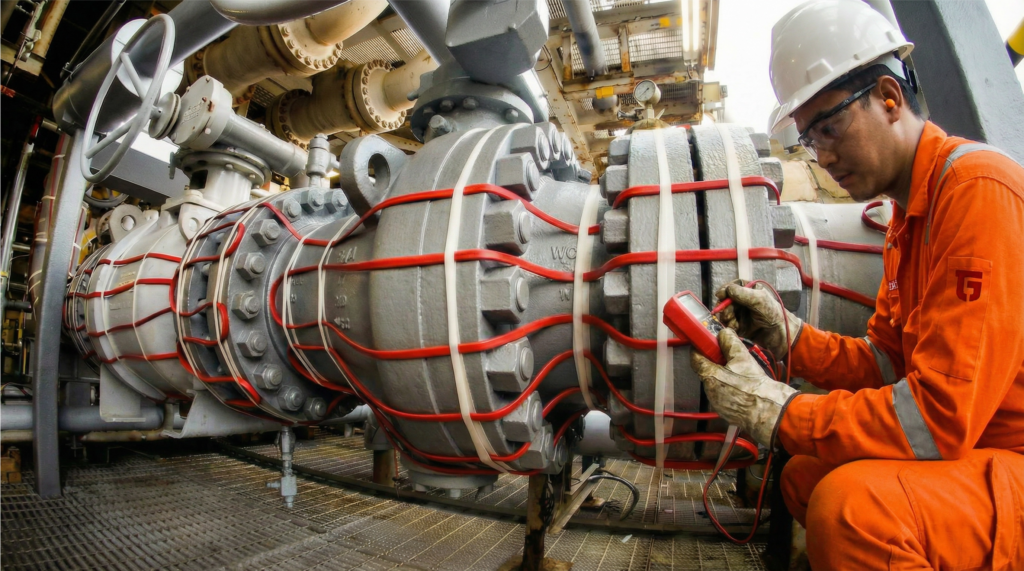
Most faults in electrical trace systems do not appear out of nowhere. They leave signs. The problem is that many maintenance managers don't know what to look for, or do not have a structured method for identifying these signals before they turn into costly downtime. This article presents a practical diagnostic checklist that you can use to anticipate failures and keep your electrical dash system running reliably..
Why El Dash CrashesIt'sknitting happen (and for que you psevered aanticipate)
An electrical trace system is made up of several interdependent components. When one fails, the entire chain is affected. The most common problems include:
Degradestion of the Heating Cable:
Electrical trace cables, especially the older ones, degrade over time. Insulation may crack, the conductive material can oxidize, and electrical resistance may increase or decrease unpredictably. This results in inconsistent heat delivery.
Temperature Controller Failure:
The controller is the “brain” of the system. When it fails, the system loses the ability to regulate the temperature, resulting in excessive or insufficient heating.
Temperature Sensor Problems:
If the sensor is not reading the temperature correctly, the controller receives false information and makes wrong decisions. A reading off by just a few degrees can result in an out-of-control process..
connectedLoose or CorrosionO:
Connections between the distribution panel, the controller, the sensor and dash are critical points. Loose connections or corrosion may result in loss of signal, voltage drop or complete circuit failure.
T insulationIt'srmic Inadequate:
Even if the dash is working correctly, Inadequate or deteriorated insulation can result in thermal losses so high that the system cannot maintain the desired temperature.
The good news? All of these problems leave signs that you can detect before that result in a production stoppage.
O Checklist de Diagnfromstic: 10 Critical Points to Check
Use this checklist regularly to keep your electrical trace system in perfect working order..
1. Check Setpoint Temperature vs.. Actual Temperature
What to do:
Using an Infrared Thermometer or a Portable Temperature Sensor, measure the actual temperature of the pipeline at various points (Prohibited, quite, exit). Compare with the setpoint programmed on the controller.
What to look for:
- Deviations greater than 5°C between the setpoint and actual temperature indicate a problem.
- Temperature variations along the pipeline (hot spots e cold spots) suggest that the dash is not distributing heat evenly.
AhereO:
If you encounter deviations, check the temperature sensor (next step) and thermal insulation.
2. Inspect the Temperature Sensor
What to do:
Locate the temperature sensor that is connected to the controller. Check that it is well fixed to the piping and that the contact is good.
What to look for:
- Loose or incorrectly positioned sensor.
- Corrosion or oxidation on connectors.
- Damaged or disconnected wire.
- Sensor buried in insulation (must be in direct contact with the piping for accurate reading).
AhereO:
Find problems, reposition the sensor or replace if necessary. Make sure it is in direct contact with the piping, not buried in insulation.
3. Check the Temperature Controller
What to do:
Access the control panel and check the controller status. Look for error lights, alarm messages or anomalous behavior.
What to look for:
- Error lights on.
- On-screen alarm messages.
- The controller does not respond to commands.
- Frozen temperature reading (does not change over time).
AhereO:
If you find errors, consult the controller manual to interpret messages. If the problem persists, the controller may need replacement.
4. Inspect the Connectionsis HeIt'stricks
What to do:
Check all connections between the distribution panel, the controller, the sensor and trace termination. Look for signs of corrosion, loose connections or damaged wires.
What to look for:
- Green or white corrosion on connectors (oxidation).
- Connections that move when you touch (loose).
- Wires with damaged or exposed insulation.
- Burning or discoloration around connectors (overheating sign).
AhereO:
Tighten loose connections. If you find corrosion, clean with an appropriate contact cleaner or replace the connector. If you find damaged wires, replace immediately.
5. Check El Trace Cable IntegrityIt'strico
What to do:
Visually inspect the trace cable along the entire length of the piping. Look for physical damage, damaged insulation or signs of aging.
What to look for:
- Cracked insulation, peeled or discolored.
- Exposure of conductive material.
- Mechanical damage (dented, cut).
- Separating the cable from the pipe (the adhesive may have lost adhesion).
AhereO:
If you find minor damage, you can apply protective tape as a temporary measure. For greater damage, the damaged segment of the cable must be replaced. For critical systems, consider a complete retrofit with better quality cable.
6. Assess T InsulationIt'srmic
What to do:
Inspect the insulation around the piping. Look for signs of deterioration, moisture or damage.
What to look for:
- Wet insulation, damp or moldy.
- Loose or falling insulation.
- Cracks or separation of insulation.
- Areas where insulation is completely lacking.
AhereO:
If the insulation is wet, it needs to be dried or replaced (wet insulation loses its thermal insulation capacity). If it's loose, retighten or replace. If it is missing in sections, add additional insulation or replace the section.
7. Check ContinuityIt'sCircuit Trial
What to do:
Using a multimeter, check trace circuit continuity. Measure trace cable resistance.
What to look for:
- Infinite resistance (open circuit): indicates a break in the cable.
- Zero or very low resistance:may indicate a short circuit.
- Resistance significantly different from nominal value: may indicate degradation of the material.
AhereO:
If you find an open circuit, the cable needs to be replaced. If you find a short circuit, shut down the system immediately and investigate. If the resistance is too high, the cable may be aged and preventive replacement may be appropriate.
8. Test your TensFood
What to do:
Using a multimeter, check the supply voltage on the distribution panel and controller.
What to look for:
- Voltage significantly below nominal
- Voltage fluctuations
- Lack of voltage on one or more phases (for three-phase systems).
AhereO:
If the voltage is low, check main power and transformer. If there are fluctuations, There may be a problem with the electrical network or distribution panel. Consult an electrician if necessary.
9. Inspect the Termination of the Trace
What to do:
Locate the ending of the dash. Check that it is well connected and that there are no signs of damage.
What to look for:
- Loose connection.
- Corrosion or oxidation
- Physical damage
AhereO:
Tighten connections if they are loose. If you find corrosion, clean or replace. If you find physical damage, replace the ending.
10. Revise o HistfromRich in Maintenance and Failures
What to do:
Review system maintenance history. Look for recurring failure patterns, frequent repairs or problems that come back repeatedly.
What to look for:
- Same issue happening at regular intervals.
- Multiple repairs on the same component.
- Problems that get worse over time.
AhereO:
If you find a pattern, This may indicate a systemic problem that is not being addressed at the root. A complete design review or replacement of critical components may be required.
Recommended Inspection Frequency
For critical systems (that if a failure results in production stoppage), we recommend:
- Monthly Visual Inspection: Check the items 1, 2, 4, 5, 6 e 9.
- T inspectionIt'scnica Trimestral: Check all 10 items.
- Revis“Annual”: Review maintenance history and consider further testing.
For less critical systems, a quarterly inspection may be sufficient.
When to Call an Expert
There are situations where you should involve an electrical trace specialist:
- When you encounter an open circuit or short circuit.
- When the temperature cannot be maintained despite all adjustments.
- When there are multiple recurring failures.
- When the system has more than 15 years and is experiencing frequent problems.
- When you need a system retrofit or upgrade.
A specialist can do more in-depth testing, such as infrared thermography analysis, electrical insulation tests and performance simulations.
Oh Prfromnext step: From Reaction to They foreseedog
Using this checklist regularly transforms your approach to maintenance reactive (put out fires) for preventive (anticipate problems). This results in:
- Fewer unexpected stops.
- Greater system reliability.
- Lower maintenance costs over time.
- Maintenance team more focused on strategic tasks
Scooter – Electric Trace
Electrical trace systems are critical solutions for maintaining temperature in pipelines, tanks and industrial equipment. Tayga Heating Solutions offers complete electrical trace solutions, from design and engineering to supply, installation and commissioning, ensuring compliance with standards such as IECEx and ABNT for classified areas

Ddarkens how Tayga group heating and insulation solutions can transform their industrial operations.
Get in touch today to learn more about our services and how we can help you achieve excellence on your next project.

We are available through do site (click here) or by e-mail contato@taygahs.com or at phone and Whatsapp (21) 9.8819-3687.
We also recommend reading our materials on the heating and insulation systems implemented by Tayga (just click and you will be redirected):