

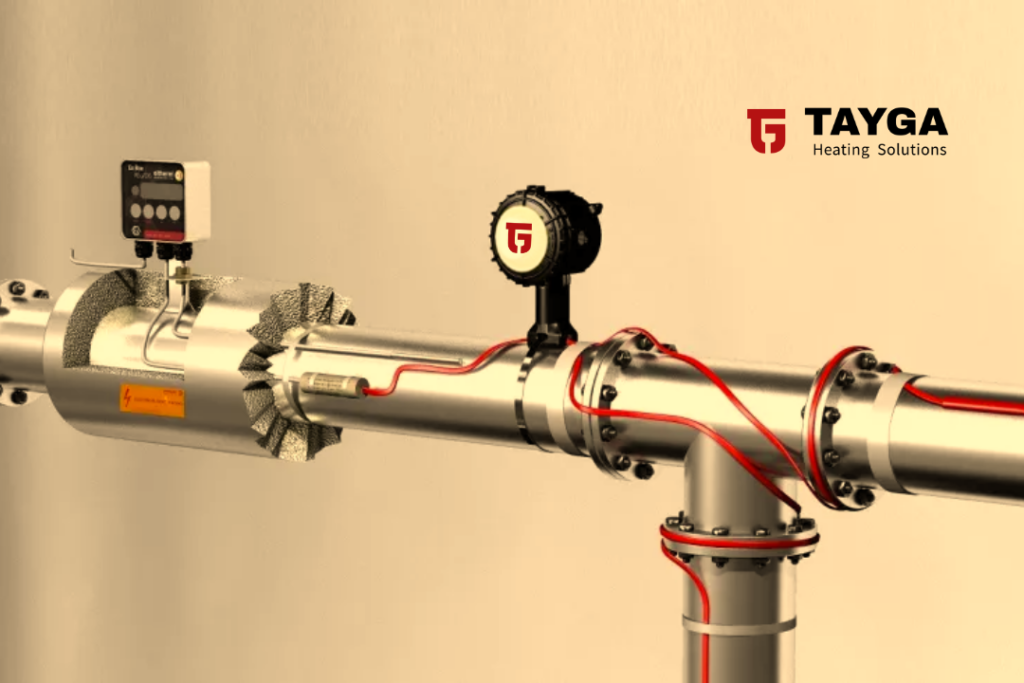
Understand how proper use of sensors and thermostats in electric trace systems is essential to ensure accurate heating, avoid energy waste and protect the integrity of industrial processes. Find out how Tayga applies technical engineering to configure safe and efficient systems.
In industrial electric trace systems, thermal efficiency and process safety do not depend only on the type of cable or isolation used. One of the main components responsible for ensuring the ideal performance is the temperature control system, formed by Thermostats, Sensors and Controllers.
The incorrect choice of these elements or their poor configuration can result in:
- Overheating of the pipe
- Electricity Waste
- Damage to the heating cable
- Operational failures in industrial processes
In this article, We explain how thermostats act in controlling the electric trait and what are the good practices to ensure an efficient and safe thermal system.
Why temperature control is essential?
The electric stroke is designed to heat pipes and equipment with constant or self -regulatory power, but what ensures that this heat is applied only when necessary is the temperature control. It acts as a “brain” of the system, activating or deactivating heating according to the need for the process.
Direct benefits:
- Prevents overheating
- Keeps the temperature within the ideal range
- Reduces electricity consumption
- Increases system life
- Guarantees stability in industrial processes
What is an industrial thermostat?
THE thermostat is the device responsible for turning on and off the electric trace system based on the temperature read by a sensor. Can act simply (call/off) or integrate a more complex system with continuous control and remote monitoring.
Most used types in thermal trait:
- Electromechanical thermostat: Simple control, with fixed or adjustable adjustment point
- Electronic controller: offers greater accuracy and can be integrated with digital sensors
- System with PLC or centralized automation: allows multiple zones control and software parameterization
Types of temperature sensors used
The correct choice of sensor directly impacts the system accuracy. The most common in thermal trait are:
- Thermocouples (Type J, K, etc.): Good measurement range and quick response
- Rts (Pt100): High precision and stability
- NTC/PTC: used in simpler systems
They can be installed:
- In direct contact with the fluid or surface to be heated
- On the outer wall of the pipe
- In the air near the layout (environments with significant external variations)
Main control strategies in electric trait
- Local temperature control
Uses thermostats or sensors directly connected to the point of trace, activating the cable when the temperature drops below the adjustment point.
Benefits:
- Reduced cost
- Simple application on short sections or individual pipes
Limitations:
- Minor accuracy
- Not ideal for sensitive processes or with large environmental variations
- Centralized Temperature Control (Control Panel)
Connects several electrical features to a panel with multiple control channels, allowing individual management of each heated zone.
Benefits:
- High precision
- Allows adjustment by software and registration of thermal history
- Ideal for large industrial facilities
Limitations:
- Higher cost
- Requires automation infrastructure
- Hybrid control (There are many variables involved in the calculation of the acoustic solution + Centralized)
Combines local sensors with communication to the central control system, Creating an intelligent thermal response system.
Consequences of lack of adequate control
- Excessive pipe heating
- Increased electricity bill
- Damage to the external coating of the cable
- Decreased trace life
- Critical process interruptions
- Non -compliance with safety standards (ex: NR-10)
Good practices for choice and configuration
- Define the ideal control point: Evaluate if the measurement will be done in the fluid, on the surface or in the environment.
- Choose the right sensor: Take into account the temperature range, thermal response and installation environment.
- Use cable -type thermostats: power, tension and feature characteristics need to be compatible with the controller.
- Correctly install: The position of the sensor influences reading. Poorly done isolation or imperfect contact generates inaccurate measurements.
- Verify: sensors and thermostats must be tested to ensure calibration and operation.
Tayga's commitment to precise and efficient systems
Na tayga, We know that an efficient electric trait depends on the Complete Engineering: from choosing the cable to the temperature control.
That is why, Our projects include:
- Technical selection of sensors and thermostats according to the reality of the process
- Tailor -made control panels
- Fluid type personalization, Environment and thermal Range
- Integration with automation systems when necessary
- Installation and tests according to good technical practices and national standards
Conclusion
Temperature control in electric trace systems is much more than a technical detail – This is what determines efficiency, safety and reliability of the entire solution.
With the correct selection of sensors and thermostats, combined with a well -executed technical project, It is possible reduce operating costs, Ensure thermal stability e prolong system life.
If you seek a reliable industrial heating solution, safe and energetically efficient, Talk to Tayga. We developed complete thermal trace projects, with precision engineering for each industrial need.

DDiscover how Tayga heating solutions can transform your industrial operations.
Get in touch today to learn more about our services and how we can help you achieve excellence on your next project.

We are available through do site (click here) or by e-mail contato@taygahs.com or at phone and Whatsapp (21) 9.8819-3687.
We also recommend reading our materials on the heating and insulation systems implemented by Tayga (just click and you will be redirected):