

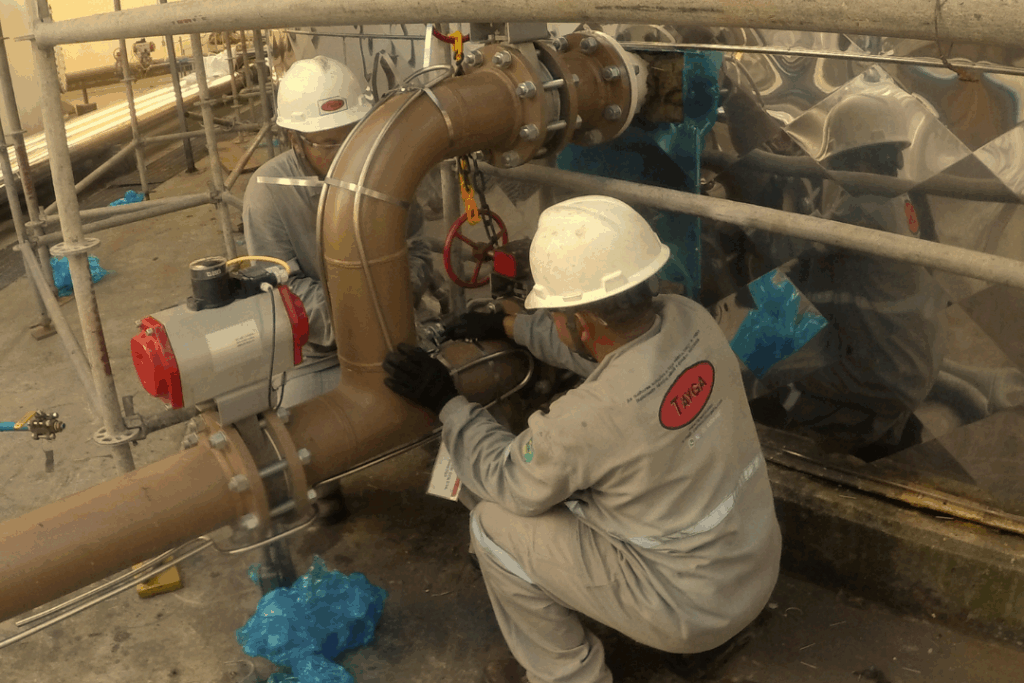
Find out how to carry out preventive maintenance on the High Performance Steam Dash. Understand what to inspect, how often to act and how to avoid operational failures.
Preventative maintenance is an essential part of the operation of any industrial system, especially when it comes to thermal control. In the case of the High Performance Steam Stroke, Keeping the system in good working order is essential to ensure energy efficiency, operational safety and continuity of production processes.
In this article, we address the main points of attention related to preventive maintenance of this system, explaining their importance and how to plan inspections correctly.
Why carry out preventive maintenance on the High Performance Steam Traction?
Even though it is a robust and reliable solution, the High Performance Steam Dash may suffer from the natural degradation of its components over time. No regular inspections, discrete failures can evolve into more complex problems, What:
- Reduction in heating efficiency;
- Condensate accumulation at critical points;
- Uneven thermal performance;
- Risk of unexpected stops in industrial processes.
Preventative maintenance allows you to identify these points in advance, avoiding operational losses.
What to check during preventive maintenance?
Preventive maintenance must cover aspects that directly impact system performance:
- Dash line integrity
Check trace continuity, integrity of connections and absence of obstruction points. - Trap operation
Steam traps must be inspected to ensure that condensate is correctly evacuated from the lines. Malfunctioning traps can compromise thermal performance and cause unwanted liquid build-up. - Thermal insulation system
Assess whether the pipe insulation is intact, no seal failures or losses that could cause heat dissipation or moisture ingress. - Fixings and supports
Check that the dash system supports are still secure, well positioned and free from corrosion or wear. - Operating pressure and temperature
Pressure and temperature measurements help assess whether the system is within design parameters and operating efficiently.
How often should maintenance be carried out?
The frequency of inspections must be defined on a case-by-case basis, according to the environment and the maintenance plan of the industrial plant.
Environments with high humidity, direct exposure to weather or industrial dirt require more frequent attention. Installations in controlled and sheltered environments may require less frequent inspections.
Registration and traceability
Maintaining a maintenance history is essential to monitor the evolution of the system. This includes:
- Date and responsible for each inspection;
- Analysis of the conditions found;
- Corrective actions taken (if there is);
- Reassessment of maintenance deadlines based on collected data.
These records help to better plan future cycles and prevent recurring failures.
Conclusion
Preventative maintenance of the High Performance Steam Traction is a strategic practice to ensure efficiency, system security and durability. With regular inspections, it is possible to avoid unexpected stops, improve process predictability and reduce costs with emergency interventions.
Tayga offers complete solutions in High Performance Steam Tracing, with expert engineering and technical support to ensure the system operates at maximum efficiency over time.

Ddarkens how Tayga group heating and insulation solutions can transform their industrial operations.
Get in touch today to learn more about our services and how we can help you achieve excellence on your next project.

We are available through do site (click here) or by e-mail contato@taygahs.com or at phone and Whatsapp (21) 9.8819-3687.
We also recommend reading our materials on the heating and insulation systems implemented by Tayga (just click and you will be redirected):